



Even as a New Mom, I Can’t Stop Romanticizing Solo Travel
January 3, 2026
On Learning Too Late to Be Gentle to My Own Body
January 17, 2026
I’d spent a good amount of my mid-20s to mid-30s traveling around Southeast Asia in a wheeled backpack that lasted way longer than most of my love affairs. My curiosity and hunger for the unknown was as full as my backpack. Border-crossing was as adventurous and logistically irritating and tiring when you don’t have passport privilege and your home country is infamous for exporting its strongest resources: its very own people.
Thailand. Vietnam. Laos. Cambodia. Myanmar. Back and forth. Ticked them all ASEAN except Timor Leste. Then eventually, I stopped moving and stayed. Four years in Vietnam. Long enough to go beyond the gloss and romance of travel and start understanding regions, systems, habits, blind spots while growing my own garden and exploring the country and mainland Southeast Asia on long weekends and holidays.
And one thing became impossible to ignore, as John Sherwin Felix—a young man who made it his advocacy to travel and know our food, from north to south of the Philippines and whose opinion in the intersection of food, culture, and travel I followed and respected a lot—posted on Facebook something along the line: Filipinos travel to Vietnam and Thailand in droves. Vietnamese and Thais barely travel to the Philippines.
This isn’t bitterness at all. It’s pure observation grounded in statistics.

In just the first quarter of 2025 alone, according to Business Mirror, over 100,000 Filipinos traveled to Thailand and nearly 72,000 to Vietnam. Scale that across a year and you’re easily looking at hundreds of thousands of Filipinos moving outward into neighboring Southeast Asian countries for leisure, work, or opportunity.
Now look the other way around. The Philippines welcomed around 7.8 million foreign tourists in the first half of 2025, while Thailand received over 32.9 million and Vietnam about 21.17 million. And within those Philippine numbers, travelers from Thailand and Vietnam barely register as significant source markets. They go somewhere else, mainly northeast Asia.
So no, this isn’t about curiosity or openness. Filipinos are demonstrably curious about their neighbors—they show up in Thailand and Vietnam in large numbers, year after year.
But that curiosity is not reciprocated. Thai and Vietnamese travelers, and foreigners more broadly, do not show the same pull toward the Philippines. The numbers barely move in the opposite direction.
And this imbalance isn’t accidental. It’s structural. Cultural. Economic. Strategic. And yes, painfully self-inflicted.
We like to frame the Philippines as “underrated,” as “hidden,” as a place people just haven’t figured out yet. That narrative is comforting. And old. It lets us avoid the harder question: What exactly are we offering, and to whom? What charms do our neighbors have that we don’t?
Because when you flip the lens around, the imbalance is glaring.
Geography can be advantageous
Thailand and Vietnam have a massive advantage that Filipinos rarely acknowledge properly: they are mainland countries.
You land once and you move freely. Train. Bus. Motorbike. Overnight sleeper. Spacious luxurious limousines (the Vietnamese slang for private vans). No panic about missed ferries. No weather-dependent boat transfers. No extra inter-island domestic flights—which are expensive as traveling to Vietnam or Thailand—stacked on top of international ones.
You can explore multiple regions or 2-3 countries (Vietnam-Cambodia-Thailand) without hemorrhaging money or energy.
In Vietnam, I could wake up in Hanoi, decide on a whim to go north or south, and be on a bus, train, or in a private van within two hours. In Thailand, island hopping is optional, not mandatory. The country doesn’t punish you logistically for wanting variety.

The Philippines does.
Every meaningful change of scenery comes with expensive logistical and geographic friction. We are equally gifted and cursed with our archipelagicness. You gotta think about boat schedules. Cancellations. Flights that cost as much as regional international flights. Entire days lost just moving. Back then when I met fellow travelers, I often expressed traveling mainland Asia (or Europe, to use my current status in life) is amazing. You can go be in a new country with in an hour or so, while going to the neighboring island in the Philippines was a whole-day affair.
And yes, that’s exhausting. And expensive.
Some Filipinos tolerate this because it’s home. Because we have long accepted that we indeed have thousands of islands. Because we’re used to inconvenience. Because we’ve been trained to normalize inefficiency. But for travelers from neighboring countries with similar incomes, this isn’t charming. It’s a deterrent.
Food is a narrative, and the Philippines “doesn’t have it“
This part hurts the most to write, because Filipino food deserves better than what we’ve done with it.
Let’s be blunt. In over a decade of traveling, the most common reaction I’ve heard from foreign travelers about Filipino food is disappointment. Especially they’d been to Vietnam and Thailand.
And the examples they cite are always the same. Fast food chains. Adobo. Sinigang. Lechon. Grilled chicken. That’s it.
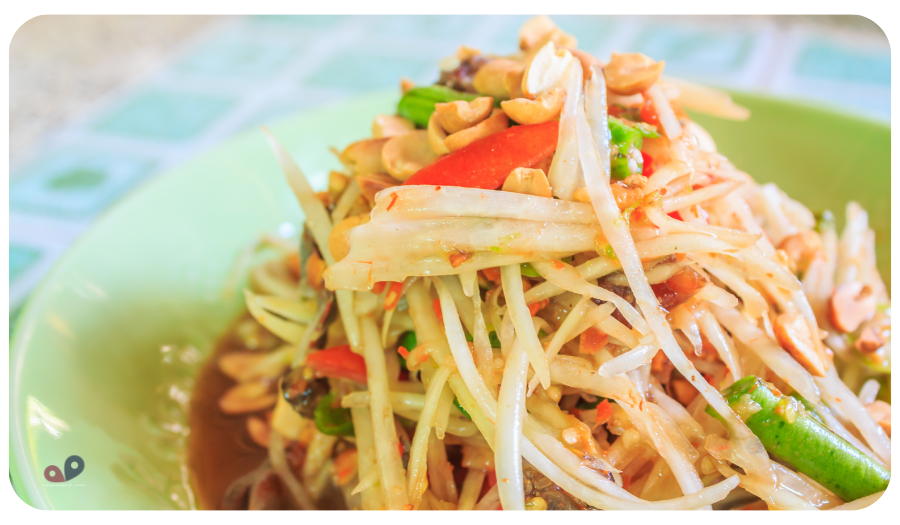
Meanwhile, Vietnam has turned regional specificity into a tourism strategy. Hue is bun bo Hue. Hanoi is bun cha. Hoi An is cao lau. Vinh is eel soup. Food is place-based. Memory-based. Marketed with intention.
Thailand does the same, even if I can’t rattle off the names as effortlessly. You feel it. Each region feeds you differently. Food is not a side attraction; it is THE attraction.
Now compare that to the Philippines.
Last March, we spent an entire week in Boracay. Seven days in one of the country’s most visible destinations, a place meant to represent us. And every Filipino restaurant we walked into told the same story, over and over again. Pancit. Adobo. Sinigang. The same menu recycled with very minor variations (mostly the amount of salt present) as if Filipino food were a fixed set rather than a spectrum.
It wasn’t that the food was bad. We thoroughly enjoyed. Well, at least the first three days. After that, I wanted to try something new. I kept thinking about how different this feels in Thailand or Vietnam, where restaurants often commit to one or two regional cuisines. A northern dish here. Central food there. Something distinctly coastal or mountain-driven, clearly named and clearly placed. You’re not expected to understand everything at once, but you’re offered varieties.
And this is the tragedy: Filipino food is incredibly varied. Anyone who has actually eaten across the country knows this—not just through restaurant menus, but through someone’s kitchens (the greatest joy of traveling is when locals invite you to their own home for a meal), markets, long bus rides, and meals that make sense only in the place they come from.
I know this because I’ve tasted it. Across islands, across regions. The differences are not subtle. They’re shaped by climate, by trade, by what grows easily, by who passed through and who stayed.
And that’s exactly why the missed opportunity feels so glaring.
In places like Boracay, Palawan, Cebu, or Siargao, food could be doing so much more than feeding tourists. These destinations are where people form their first, and sometimes only, impression of the country. Yet what’s offered there often collapses complexity into something generic, safe, or vaguely familiar.
This is where I keep coming back to government as a food culture curator. No single restaurant can carry this alone. No small cook or regional producer has the reach or capital to reframe a national food narrative by themselves.

There could have been a deliberate effort to make inter-island food culture accessible right where attention already is. Making regional dishes available in popular destinations. Menus that explain why food tastes the way it does in that region. Spaces where Ilocano, Bicolano, Mindanaoan, or Cordilleran food is presented with context, not stripped of it.
Instead, we leave it to chance. To whether a traveler happens to meet the right local, ends up in the right place, asks the right questions.
And so Filipino food remains something people stumble upon rather than seek out. Not because it isn’t worth traveling for, but because no one with enough influence has taken on the work of framing it.
We’re not talking about turning food into spectacle or diluting it for tourism. It’s about access. About making regional food legible without making it shallow. About recognizing that food is one of the most immediate ways people understand a place.
I can’t help but see it as a quiet failure of imagination. We had, and still have, the raw material: diversity, history, flavor, story. What’s missing is the connective tissue. The willingness to say: this matters enough to curate, to explain, to present with intention.
Until that happens, the imbalance will remain. Filipinos will continue traveling through neighboring countries absorbing clearly framed cuisines, while our own stays fragmented, local, and largely invisible to its own people and to the people passing through our most popular islands.
Not because it lacks richness. But because we never made that richness easy to see.
Accommodation prices make zero sense
This is where the math completely collapses.
Vietnam and Thailand offer incredible value. Ten to fifteen dollars gets you a clean, spacious, comfortable room. Sometimes beautiful. Sometimes with breakfast.
In the Philippines? Thirty to forty dollars is often the entry point for something decent. And that’s being generous.
For travelers from Thailand or Vietnam, whose salaries are not wildly different from ours, this makes the Philippines a bad deal. Not a dream destination. A financial question mark.
Why spend more for less comfort, more logistical stress, and fewer options?
Filipinos traveling outward feel rich. Inbound travelers feel overcharged.
Architecture tells people whether you value your past
When you look at why people visit Southeast Asia, the pattern is consistent. According to UNWTO and national tourism board data, culture and heritage rank among the top three motivations for visiting Thailand and Vietnam, alongside food.
Thailand has 7 UNESCO World Heritage Sites. Vietnam has 8. The Philippines has 6, but here’s the difference: Thailand and Vietnam actively build tourism narratives around them. Old quarters are protected. Colonial buildings are maintained. Streets are regulated. Visual restraint is enforced.
Walk through Hanoi’s Old Quarter or Chiang Mai’s historic center and you feel it immediately. These places don’t apologize for age. They lean into it.
Then you come home. What do we preserve?
Basketball courts. Concrete boxes. Endless visual noise.

We demolish more than we protect. We repaint over history. We allow heritage buildings to decay or be swallowed by malls and parking lots. We don’t weave architecture into tourism storytelling in any coherent way.
And then we wonder why visitors don’t feel awe.
Here’s the uncomfortable number: countries with strong, visible heritage preservation consistently outperform us in arrivals, even when their natural assets are comparable. Vietnam surpassed pre-pandemic tourism levels faster than the Philippines. Thailand exceeded them entirely.
Architecture is more than just beauty; It’s about respect and continuity. It signals whether a country knows who it is and whether it respects its own past enough to keep it visible.
Right now, the Philippines looks like a building wrapped in scaffolding, yet it does not know what it is building or for whom.
Brown But Too White, Too Washed Down
This is where our uniqueness becomes our downfall.
The Philippines was colonized twice—first by Spain, then by the United States. That double imprint didn’t just shape governance or language. It also shaped aspiration. Taste. Aesthetic. What we were taught to value and what we learned to downplay.
Compared to Vietnam and Thailand, our identity is harder to read from the outside. Vietnam’s relationship with colonialism is visible but defiant. Thailand famously avoided formal colonization and leans into that continuity with confidence. Their cities, food, and architecture feel rooted, even when modernized.
Ours often feels filtered. Too watered down. Too confused. Confusing.
We borrow heavily from the West, sometimes too eagerly. American urban layouts. Spanish names without Spanish preservation. English everywhere, often at the expense of our own languages. What’s left is an identity that feels diluted and unauthentic rather than distinct.
And for foreign travelers, that dilution matters.
People don’t cross continents to see a softer, literally dusty version of what they already know. They travel for difference. For specificity. For places that feel unapologetically themselves.

This is the uncomfortable part: we are often not interesting enough to outsiders, because we’ve spent decades trying to be legible to someone else.
There’s also a regional layer we rarely talk about. Southeast Asia isn’t a flat playing field. There’s hierarchy. Quiet competition. Historical and economic side eyes.
There is a large Filipino community in Vietnam and Thailand. Everyone knows this. And often, Filipinos there are seen through a specific lens: people who left because their country couldn’t give them enough. Better jobs elsewhere. Better pay. Better systems.
And that perception sticks.
So when foreigners see Filipinos working, migrating, settling elsewhere in the region, an unspoken question follows: if they left, why would I go?
It’s not fair. But it’s real.
We export labor at scale, brains and bodies alike. We talk about resilience as if it’s a virtue, when it’s often a necessity. And in doing so, we unintentionally reinforce a narrative that the Philippines is something to escape, not something to arrive at.
Vietnam and Thailand export culture. We export people.
That imbalance shows up everywhere—in tourism numbers, in global curiosity, in how our country is framed abroad. My in-laws often shared actual newspaper clippings on the Philippines to me. Guess what: in my four years in Germany, so far there was no good news about the Philippines that were handed to me. It was all about corruption, floods, killings.
No, we can’t blame Filipinos for leaving. Most leave because they have to. Heck, I’m one of them. I even applaud us for having the courage to say no to these systemic injustices. And wanted out.
Right now, our story reads as the typical “bahala nas batman” rather than conviction. As adaptation rather than authorship. As problematically resilient rather than strategic and prepared.
We are too confused. Too washed down. Too eager to please.
Until we decide to stand behind what makes us specific—even when it’s messy, regional, or hard to package—we will continue to be seen as familiar, but not compelling.
Known. But not chosen.
We depended on our smiles and beaches for far too long
For far too long, we’ve marketed the same two things – our smiles and our beaches. As if warmth and scenery could carry an entire country on their own.
Yes, the Philippines has beautiful beaches. But so do Thailand and Vietnam. Easily accessible ones. Beaches alone don’t explain why Thailand welcomed over 35 million visitors in 2024, or why Vietnam drew around 17.5 million, while we struggled to reach 8 million.
Natural beauty isn’t a differentiator when everyone in the region has it. What differentiates is what you build around it.
Tourism numbers don’t reward places that are beautiful but difficult, rich but poorly connected, diverse but badly framed. They reward places that make culture accessible without making it cheap.

And this is where the comparison sharpens. Thailand and Vietnam don’t depend on one headline attraction. They layer deliberately. Beaches plus cities. History plus food. Architecture plus regional identity. All within reach. All explained. All intentional.
We, on the other hand, keep asking nature, our smile, and our English to do the heavy lifting. As if scenery alone can compensate for weak infrastructure, thin storytelling, and the absence of a coherent national frame.
It can’t.
Architecture tells visitors whether you value your past. Food tells them whether you understand your regions. Accessibility tells them whether you actually want people to see any of it.
And travelers, quietly and consistently, put their money where they enjoy it most. Where the experiences are varied and complete. And certainly that’s not the Philippines.


1 Comment
Hi Jona
This is a great article, eloquent, articulate and succinctly observed.
I’m a seasoned, solo traveller, both on business and for leisure. I escape the UK winter each year (retired, male) for about 5 months. I’ve had extended stays in numerous Asian countries including Thailand, Vietnam, Myanmar, Malaysia and Sri Lanka in previous years, I am currently in Cebu, visiting the Phillipines for the first time. I couldn’t agree more with your observations, they are spot on. I’m lucky enough to be able to choose between luxury and budget options for travel, accommodation, food and entertainment. I often opt for the more adventurous as this bring you closer to the people of a host nation, often more entertaining and educational.
I’ve only been in the Phillipines (Manila then Cebu) for a week and have witnessed everything you describe above, I was also mildly troubled by what I’ve experienced, particularly with regard to the food, which is a major influence in my selection of destinations. I’m planning on going to Moalboal at the end of January, so discovered this article whilst looking for bus information.
Anyway, should you have any strong recommendations for me whilst in Cebu and Moalboal, I’d be happy to hear from you at the supplied email address.
Cheers
Jan